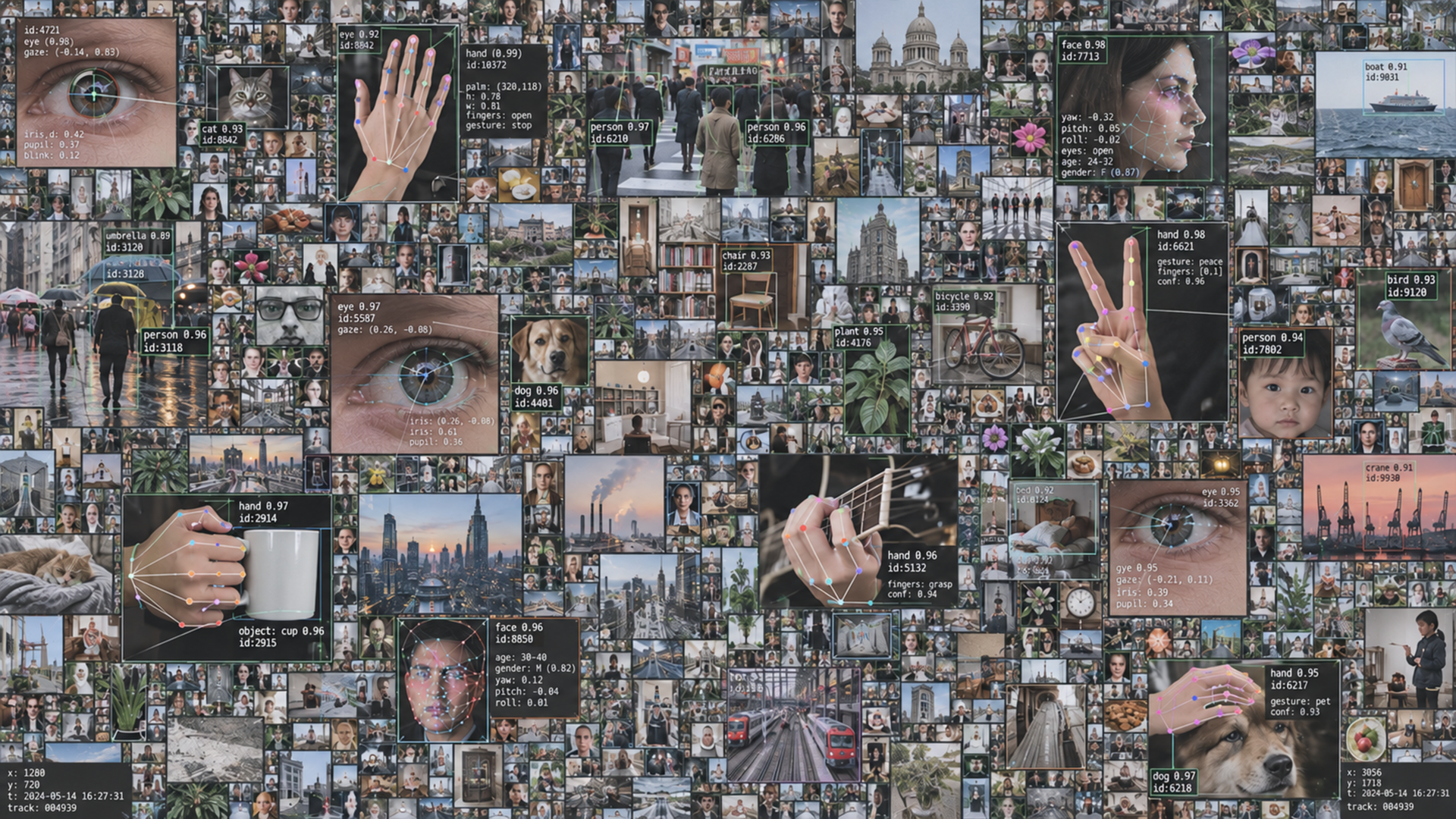
An extra large combo meal of UI, a compilation of symbolized interfaces that point towards nothing.
Screen Space turns the interface into its own subject. Buttons, windows, and indicators multiply across screens of different shapes, detached from any underlying action or content. The interface remains convincing because familiar UI language and technological aesthetics carry an assumed authority: if it looks like a system, we believe something must be working. This symbolic borrowing works as a kind of digital witchcraft, arranging recognizable signs into a persuasive ritual of intelligence and control.
As screens spread across devices, buildings, and public spaces, their surfaces become endlessly saturated. Images, instructions, advertisements, and personal experiences occupy the same flattened visual plane, where differences in context and significance give way to competition for attention. Screen space keeps expanding, while everything within it becomes another interchangeable element.
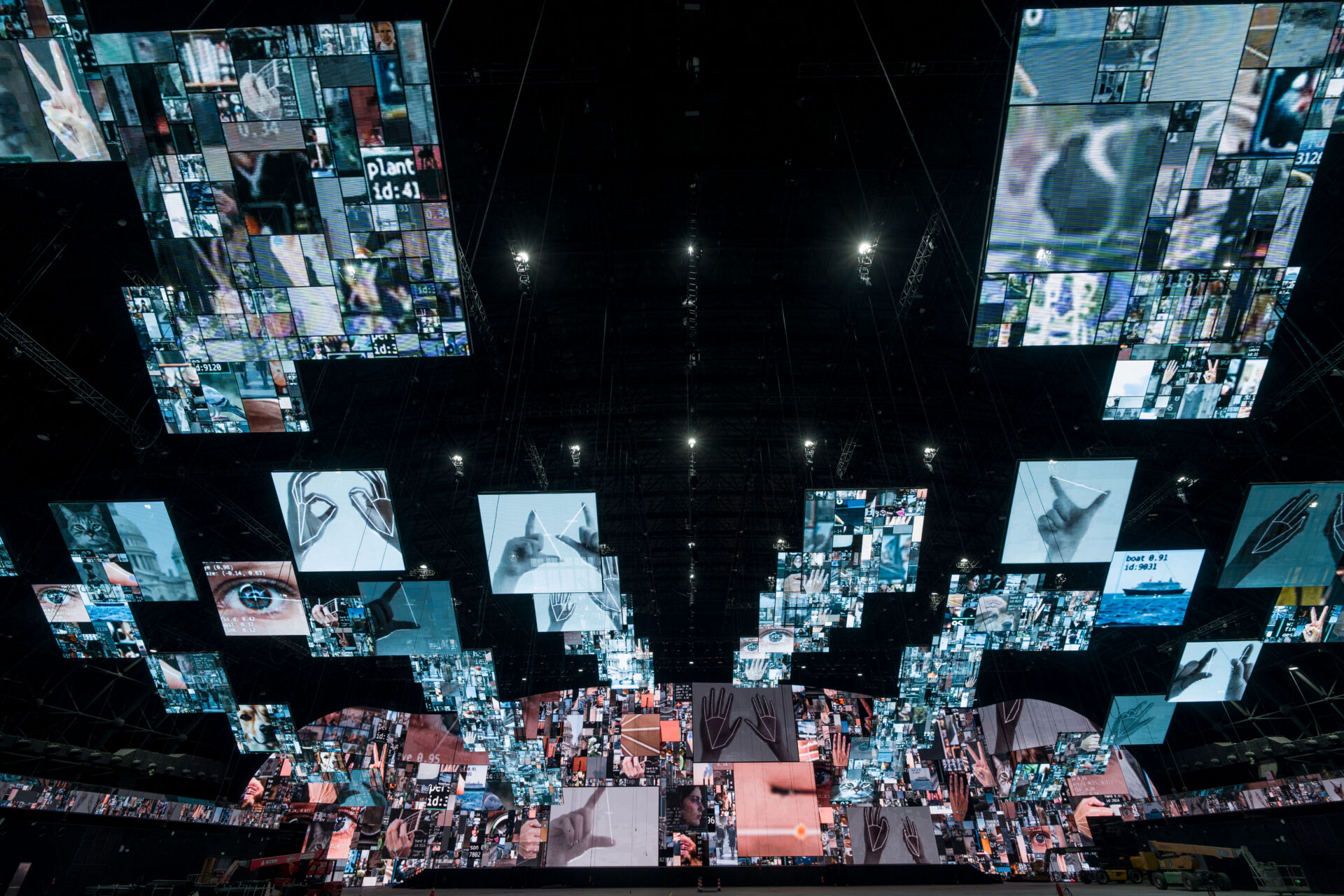
The work responds to this informational chaos with content that can fill and adapt to any screen shape, at any size, in any location. Its apparent universality makes the particularities of each place irrelevant. Even an immersive dome becomes another surface to populate. The screen becomes a screen again: whatever its architectural form or promise of immersion, it remains a surface awaiting content.
Simultaneously full and empty, the work surrounds the viewer with signals of activity that offer nothing to understand or control. What remains is the convincing appearance that something meaningful is happening.
Screen Space - Machine Interface Filler Test @Hero Dome Shanghai 2026